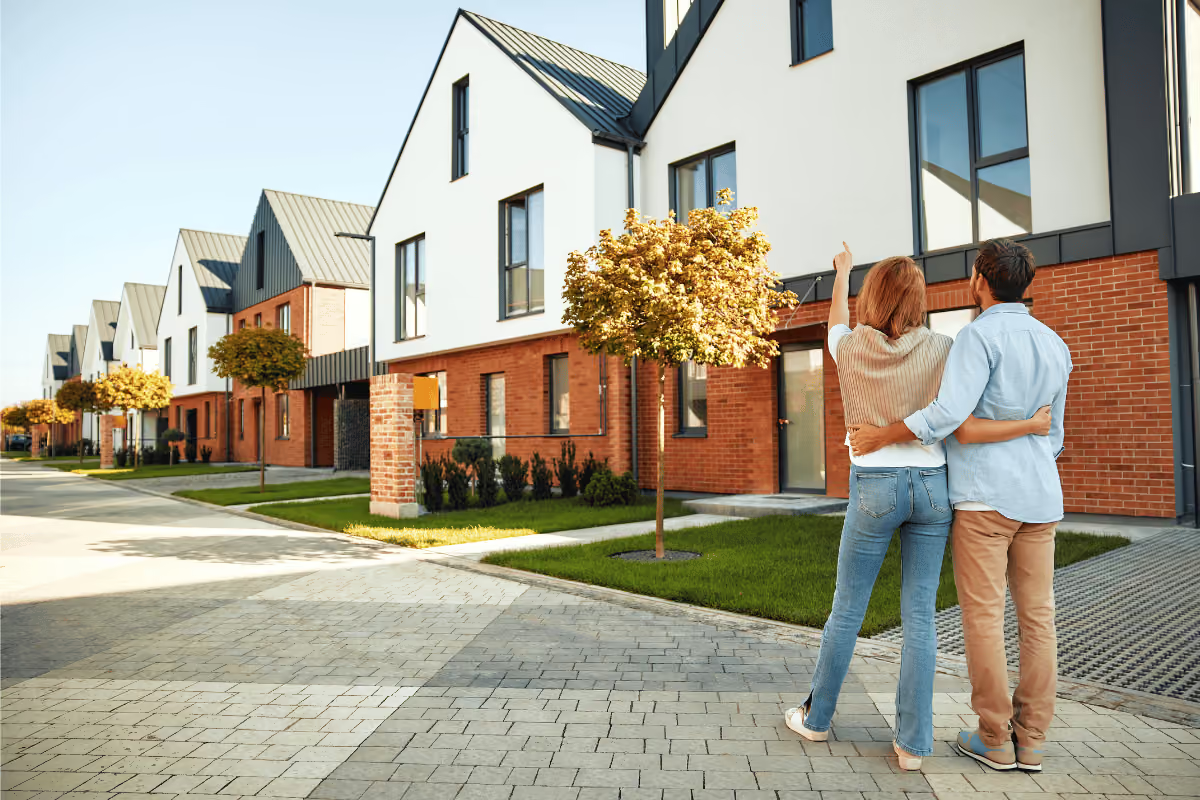

Building a New Home: Finance Steps and Timing | The Digital Brokerage

Building a New Home?

Navigate the finance process for building a new home. Understand construction loans, progress payments, timing considerations, and how to prepare for each stage.

Building a new home is more complex than buying an established property, and the finance process reflects this additional complexity. Construction loans work differently than standard home loans, with funds released in stages as your build progresses rather than in a single lump sum at settlement.

Understanding how construction finance works, what lenders require, and how to time each stage prevents costly delays and keeps your build on track. This guide walks you through the entire finance journey from pre-approval to final completion.

Understanding Construction Loans

Construction loans are designed specifically for building new homes. Instead of receiving all funds upfront, the lender releases money in progressive payments (or drawdowns) as each stage of construction is completed and verified.

This protects both you and the lender by ensuring funds are only released when work has actually been done to the agreed standard. It also means you only pay interest on the amount drawn down so far, not the full loan amount.

During construction, most borrowers make interest-only payments on the drawn-down portion. Once construction completes, the loan typically converts to a standard principal and interest home loan with regular repayments beginning.

Construction loan timelines are longer than standard loans because lenders need to assess not just your finances, but also your builder, building contract, and construction plans. Applications can take 4-6 weeks for approval, and the entire build-and-finance process spans 6-12 months or more.

Key differences from standard home loans:

  • Funds released in progressive stages as construction milestones are reached
  • Interest-only payments during construction on drawn-down amounts
  • Lender inspections required before each progress payment
  • Longer approval timelines as lenders assess builder, contract, and plans
  • Higher interest rates during construction phase (typically 0.3-0.5% above standard rates)

Pre-Approval and Planning Stage

Start the finance process before finalizing your building contract. Pre-approval for a construction loan confirms how much you can borrow and gives you confidence in your budget when choosing land, designs, and specifications.

Lenders assess your financial position the same way they would for any home loan - reviewing income, expenses, debts, employment, and credit history. However, they also evaluate the construction project itself to ensure it's viable and the builder is reputable.

Having pre-approval before signing your building contract protects you from committing to a build you can't finance. It also strengthens your position when negotiating with builders, as they know you're a serious buyer with confirmed funding.

Most lenders require you to own the land before approving a construction loan, though some offer single-contract solutions where they finance both land purchase and construction together. If buying land separately, you'll need to settle the land purchase before construction finance can be finalized.

Pre-approval preparation:

  • Get financial pre-approval before signing building contracts
  • Confirm whether lender requires land to be owned or will finance land and construction together
  • Research builders and ensure they meet lender requirements (licensed, insured, good reputation)
  • Understand total project cost including land, construction, council fees, and professional costs

Choosing the Right Builder and Contract

Lenders have strict requirements about which builders they'll approve for construction loans. The builder must be properly licensed, adequately insured, and financially stable. Some lenders maintain preferred builder lists or exclude certain builders due to past issues.

Fixed-price building contracts are strongly preferred by lenders because they provide certainty around total costs and prevent budget blowouts. Cost-plus contracts (where you pay builder costs plus a margin) are harder to finance and may face higher rates or be declined entirely.

Your building contract must clearly outline the scope of work, specifications, timeline, progress payment stages, and what happens if delays occur or disputes arise. Lenders review contracts carefully and may request amendments to unclear or unfavorable terms.

Owner-builder applications (where you act as your own builder) are extremely difficult to finance. Most lenders won't approve these due to the high risk of cost overruns, delays, and quality issues. If you must go this route, expect very limited lending options and higher rates.

Building contract essentials:

  • Fixed-price contract (not cost-plus) for lender acceptance
  • Builder properly licensed and insured with good industry reputation
  • Clear scope of work with detailed specifications and inclusions
  • Progress payment schedule aligned with construction milestones
  • Dispute resolution process and delay clauses clearly defined

Loan Application and Approval

Construction loan applications require more documentation than standard home loans. Beyond your financial information, lenders need building contracts, council approvals, soil tests, engineering reports, and detailed building plans.

The lender assesses whether the total project cost is realistic. If your budget seems too tight or doesn't account for contingencies, they may reduce the approved amount or decline the application. Always include a 10-15% buffer for unexpected costs.

Lenders order a land valuation and sometimes a "as if complete" valuation estimating what the finished property will be worth. The loan amount is based on the lower of the total cost or the completed value, and must maintain an acceptable loan-to-value ratio.

Approval timelines for construction loans are longer than standard loans because of the additional due diligence required. Plan for 4-6 weeks from application to approval, and don't commit to construction start dates until finance is confirmed.

Once approved, your construction loan approval is typically valid for 6-12 months, giving you time to finalize plans, obtain council permits, and commence construction. If you don't start within this period, you may need to reapply.

Construction loan documentation:

  • Standard financial documents (income, expenses, debts, ID)
  • Fixed-price building contract with clear specifications
  • Council-approved building plans and permits
  • Soil test results and engineering reports if required by council
  • Land valuation and sometimes "as if complete" property valuation

Progress Payment Stages

Construction loans release funds in stages tied to specific construction milestones. The exact stages vary by lender, but typically include: base stage (slab or footings), frame stage, lock-up stage, fixing stage, and completion.

Before releasing each payment, the lender sends an inspector to verify the work has been completed to the required standard. Only after inspection approval does the lender release funds to your builder.

You don't control when progress payments occur - these are driven by construction progress and lender inspection schedules. Delays in inspections can hold up builder payments and potentially slow your build if the builder is waiting for funds.

Typical progress payment percentages are: deposit (5-10%), base (15-20%), frame (15-20%), lock-up (20-25%), fixing (20-25%), completion (10-15%). Your building contract will specify the exact percentages and trigger points.

During construction, you make interest-only payments on the amount drawn down so far. As each progress payment releases, your interest costs increase. Once construction completes, the loan converts to principal and interest repayments.

Standard progress payment stages:

  • Deposit/Commencement (5-10%): Paid on contract signing or before work begins
  • Base Stage (15-20%): Slab poured or footings completed
  • Frame Stage (15-20%): Frame erected, roof frame complete
  • Lock-Up Stage (20-25%): External walls, windows, doors installed, weatherproof
  • Fixing Stage (20-25%): Internal fit-out, plumbing, electrical, plastering complete
  • Practical Completion (10-15%): All work finished, passed final inspection

Managing Cash Flow During Construction

Construction loans create unique cash flow challenges. You're paying interest on drawn-down amounts while potentially still renting or paying your current mortgage if you haven't sold yet.

Budget for higher costs during the construction period. Interest-only payments on the construction loan, plus rent or your existing mortgage, plus maintaining buffer funds for unexpected expenses can strain cash flow significantly.

Some lenders offer "capitalizing interest" options where construction loan interest is added to the loan balance rather than requiring monthly payments. This eases cash flow during construction but increases your final loan balance and ongoing repayments.

Set aside contingency funds (10-15% of total build cost) for unexpected costs. Construction almost always encounters surprises - site issues, material price increases, design changes, or council requirement variations that add to the budget.

If you're selling an existing property to fund the build, timing is critical. Settlement on your sale needs to align with your construction payment schedule, or you'll need bridging finance to cover the gap.

Cash flow management strategies:

  • Budget for interest costs on drawn-down amounts during construction (6-12 months of interest-only payments)
  • Maintain emergency buffer for unexpected construction costs (10-15% of build cost)
  • Time property sales carefully if using sale proceeds to fund construction
  • Consider capitalizing interest if cash flow is tight, understanding this increases final loan amount
  • Plan for overlap period if you can't move in immediately after completion

Council Approvals and Compliance

Lenders won't release any construction funds until you have council approval for your building plans. Development applications (DA) and construction certificates (CC) must be approved and provided to the lender before the first payment.

Council approval processes vary by location and can take anywhere from 4 weeks to 6 months or more. Complex designs, heritage areas, or challenging sites take longer to approve and may require multiple revisions.

Your builder usually manages council approvals as part of their service, but you're ultimately responsible for ensuring approvals are obtained before construction begins. Delays in approvals delay your entire project and financing timeline.

Lenders require proof that construction complies with approved plans. If you make significant changes during construction, council approval for variations may be needed before the lender will release further progress payments.

Building certifiers conduct inspections at key stages to ensure work complies with building codes and approved plans. These certifier inspections are separate from lender inspections and both must be passed before progress payments release.

Council and compliance requirements:

  • Development Approval (DA) from council before construction begins
  • Construction Certificate (CC) authorizing commencement
  • Builder's insurance and statutory warranties in place
  • Building certifier engaged to conduct compliance inspections
  • Council approval for any significant variations or changes during construction

Inspection and Payment Release Process

When your builder advises a construction stage is complete and ready for payment, you notify your lender to arrange an inspection. The lender engages an independent building inspector to verify the work.

Inspections typically occur within 3-7 business days of your request, though this varies by lender and inspector availability. Regional areas may face longer wait times due to limited inspector availability.

The inspector verifies that work matches the stage claimed, is completed to acceptable standards, and complies with approved plans. If issues are identified, the inspector may request rectification before recommending payment release.

Once the inspection passes, the lender processes payment release. This usually takes 2-5 business days from inspection approval to funds being transferred to your builder. Your builder should factor these timelines into their scheduling.

If inspections fail or payments are delayed, this can create tension with your builder and potentially slow construction progress. Maintain good communication with both your lender and builder to manage expectations and timelines.

Payment release workflow:

  • Builder notifies you that stage is complete and ready for payment
  • You submit payment request to lender with builder's invoice
  • Lender arranges independent inspection within 3-7 days
  • Inspector verifies work completion and quality, provides report to lender
  • Lender releases funds to builder within 2-5 days of passed inspection

Practical Completion and Loan Conversion

Practical completion is when your builder has finished all work, passed final inspections, and the property is ready for occupation. At this point, the final progress payment is released (usually 10-15% held until completion).

Don't release final payment until you're satisfied all work is complete and defects are rectified. Walk through the property with your builder to identify any issues, and ensure these are fixed before authorizing the final payment.

Once practical completion is achieved, your construction loan converts to a standard home loan. The interest-only construction period ends and principal and interest repayments begin based on the total amount drawn down.

This conversion happens automatically with most lenders, though some require you to apply for a new loan product. Confirm the process with your lender early so there are no surprises when construction completes.

Your lender orders a final "as complete" valuation to confirm the property's value matches expectations. This determines your final loan-to-value ratio and confirms whether your loan terms remain as approved or need adjustment.

Completion and conversion process:

  • Final inspection confirms all work complete to acceptable standard
  • Final payment released after defects rectified and completion verified
  • Occupation certificate issued by certifier (required to legally occupy the property)
  • Construction loan converts to standard principal and interest home loan
  • Final valuation confirms completed property value

Common Construction Finance Challenges

Cost overruns are the most common issue in construction projects. Material price increases, site complications, design changes, and scope creep can push costs beyond your budget and loan approval.

If costs exceed your approved loan amount, you'll need to find additional funds from savings, family contributions, or by applying for a loan increase (which requires reassessment and may be declined).

Construction delays affect your financing costs. Every extra month in construction means another month of interest payments on drawn-down amounts, plus potentially extended rent or double mortgage payments if you haven't sold yet.

Builder insolvency or disputes can halt construction entirely. If your builder goes into liquidation mid-project, you face complex legal and financial challenges recovering funds and completing the build with a new builder.

Weather events, labor shortages, material supply issues, and council requirement changes are all outside your control but can significantly impact timelines and costs. Build these risks into your planning and contingency budget.

Risk mitigation strategies:

  • Include 10-15% contingency in budget for unexpected costs
  • Choose financially stable builders with good track records and references
  • Lock in fixed-price contracts with clear scope and specifications
  • Plan for 20-30% longer timelines than builder estimates
  • Maintain emergency funds beyond the construction budget for financial flexibility

Calculate Your Construction Loan Borrowing Capacity

Use our borrowing capacity calculator to estimate how much you can borrow for your land and construction project. Remember that lenders assess total project costs including land, build, and professional fees.

What The Digital Broker  Provides

1

Access to 40+ Lenders

Compare home loan options from major banks, regional lenders, and non-bank providers to find rates and features that suit your situation.

2

Digital Application Process

Apply online, upload documents in your own time, and track progress without endless phone calls or branch visits.

3

Expert Broker Guidance

Get support from experienced mortgage brokers who understand lender criteria and can strengthen your application before submission.

4

No Upfront Fees

Our services are commission-based and paid by lenders, not by you. No cost for comparing options or preparing applications.

5

Pre-Approval Support

Understand your borrowing capacity, get pre-approved before property searching, and move quickly when you find the right home.

6

Settlement Coordination

We manage the process from application through to settlement, liaising with lenders, solicitors, and other parties on your behalf.ess needs.

Ready to get your loan?

Check Your Borrowing Capacity Now

Kocon - Webflow HTML website templateKocon - Webflow HTML website templateKocon - Webflow HTML website template